Voxyon: Mapping the World’s Loudest Yes or No
Voxyon came to us with an unusually simple idea and an unusually ambitious vision. They wanted to build a platform where the entire world could answer one question at a time — yes or no — and see the answer plotted onto a live global map. Every country, every continent, lighting up in real time as humanity weighed in.
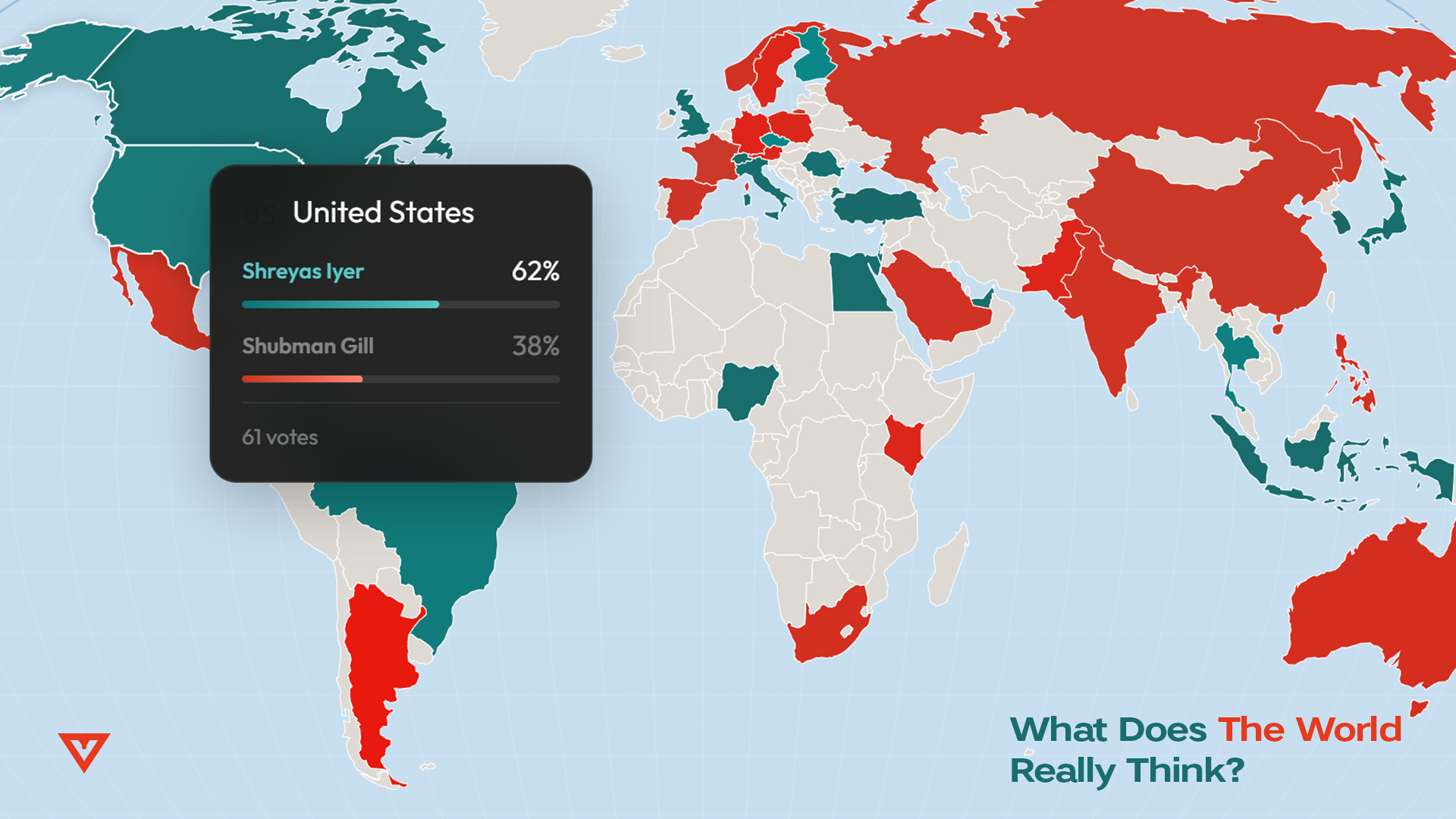
It sounded like a thought experiment until they showed us the brand name: Voxyon. A blend of vox (voice) and yon (yes or no, in archaic English). The tagline was already written: "The world’s opinion, mapped." What they needed was a partner who could turn that one-line vision into a working product — the brand, the interface, the engineering, the launch.
The brief in one line: Build a place where the world’s opinion has a face, a map, and a heartbeat.
Why this project mattered
Most polling platforms are corporate. SurveyMonkey for HR. Google Forms for events. Twitter polls that vanish after 24 hours. None of them treated public opinion as something visual, geographic, or beautiful. Voxyon’s founders wanted to fix that — to make participating in a global opinion feel less like filling out a form and more like dropping a pin on a map.
We took the project for one specific reason. The brand had soul. A naming choice rooted in two languages. A tagline that sounded like it belonged on a poster. The founders didn’t want a polling tool — they wanted a product people would screenshot and share.
Our role
• Brand identity — name reasoning, logo system, color palette, tagline polish
• Product design — every screen, every interaction, every animation
• Full-stack development — Next.js 15 frontend, MySQL database, Prisma ORM, Upstash Redis caching
• Data visualization — D3.js world choropleth map with real-time vote rendering
• Launch strategy — Product Hunt submission, social copy, IPL season poll campaigns
• Custom poll engine — supporting both Yes/No and Multiple Choice, anonymous and signed-in voting
The Challenge
Make a binary question feel weightless
The first design problem was philosophical. Yes-or-no is a heavy binary. In real life, most opinions live in the gray. We needed to make it feel light to answer — fun, even — without making the data feel trivial. The voter had to feel like their tap mattered. The viewer had to feel like the result was meaningful.
We borrowed a principle from physical voting booths. The act of casting a vote should feel deliberate but quick. The result should feel earned but immediate. From that, we worked backward into the interface.
Make a live map perform globally
A world map that updates in real time as votes pour in is technically expensive. Every vote means a database write, a cache invalidation, an aggregate recalculation, and a map repaint. Multiply that by hundreds of countries and thousands of polls and you have a system that has to be smart about every single operation it performs.
We had to build a map that felt instant on a slow phone in a small town — not just on a developer’s laptop in San Francisco. That meant rethinking the data layer from the first commit.
Make polls go viral without paid distribution
Voxyon launched with zero ad budget. The product itself had to be the marketing. That meant every poll result had to be screenshot-worthy. Every shared link had to render a beautiful Open Graph preview. The visual identity had to be so distinct that someone scrolling past a Voxyon post on Twitter would stop and look.
The constraints we worked inside
Zero ad budget at launch
Every shareable surface — poll result page, map screenshot, OG card — had to be its own marketing asset
Anonymous and signed-in voting
Two parallel rate-limit systems, two privacy models, one seamless interface
Real-time global map
Choropleth rendering that updated within 200ms of a vote landing in the database
Bot resistance without friction
No CAPTCHAs that would scare off casual visitors — yet enough signal to keep poll data trustworthy
IPL season launch window
Tight ship date because the brand wanted to ride cricket-poll engagement before the season ended
The Process
Step 1 — Naming the soul
Before writing a single line of code, we sat down with the Voxyon team to lock the brand soul. The name was already decided — Vox + Yon, voice plus a binary archaic suffix — but we expanded it into a full identity system. The brand colors became indigo (#4F46E5) and a deeper purple (#7C3AED), chosen because they sit between authority and curiosity — the same emotional register as a referendum ballot or a museum infographic.
For the logomark, we went through several rounds. A speech bubble felt too generic. A globe was on every other polling app. We landed on a fork-shaped V — a single line that splits into two paths, mirroring the act of choosing yes or no. It worked at any size, from a favicon to a billboard. The tagline "The world’s opinion, mapped" stayed almost untouched. It said everything.
Step 2 — Designing the first vote
Once the brand was locked, we designed the single most important moment in the product: casting a vote. We sketched dozens of interactions — swipe-to-vote, tap-and-hold, drag-the-pin. Most of them felt clever and wrong. The right answer was the obvious one. Two large tiles. One labeled Yes. One labeled No. Both tap targets ridiculously big. Both with subtle haptic feedback on press.
The magic happened immediately after. The moment a user voted, the screen transitioned into the live result — their country lighting up on the map with a gentle pulse animation, and the live percentage updating across the global ribbon. The vote felt like a contribution, not a submission.
Step 3 — The map
The world map is the heart of Voxyon. We built it with D3.js using a Natural Earth projection, which preserves country shapes better than Mercator for a polling context. Each country was rendered as a separate SVG path with a transition state that smoothly shifted color as the Yes-to-No ratio changed.
Behind the visual layer, we built a tiered caching system using Upstash Redis. Vote aggregates were precomputed at three levels: per country, per region, and per global. New votes incremented these counts atomically and triggered targeted cache invalidations — not full recalculations. A user in India watching a live IPL poll saw their tap reflected on the map within 200ms.
Step 4 — Making every poll shareable
We treated each poll result page as a standalone marketing surface. A custom Open Graph image generator produced a unique branded card for every poll — the question, the country breakdown, the leading answer, all rendered server-side at request time. A poll about cricket showed up on WhatsApp as a beautifully laid out card. A poll about climate showed up on LinkedIn with credibility.
We also added a QR code generator on every poll page — the brand colors, the Voxyon logo embedded in the center. Coffee shops, college events, and conferences could print a poll and put it on a wall.
Step 5 — The custom poll engine
Late in the build, the founders asked for a feature we had originally scoped out: let users create their own polls. We added it. The poll creator supports both Yes/No and Multiple Choice formats, lets creators choose between anonymous-only and authenticated voting, and generates a shareable link plus QR code on submit. The whole flow was designed as four short steps so it never felt like work.
Polls that gather meaningful traction get auto-surfaced on the Voxyon feed — a discovery layer that gives smaller polls oxygen without paid promotion.
Step 6 — Launch readiness
In the final two weeks, we shifted into launch mode. We wrote the Product Hunt submission copy, prepared a 15-asset launch kit (gallery screenshots, demo GIFs, founder quote card, OG hero image), drafted IPL-season poll questions to seed engagement, and built a WhatsApp Channel posting calendar for the founders. We also wrote the SEO articles for the founders’ sister site to point inbound traffic at Voxyon during the launch window.
What We Built
Brand identity
Logo system (Fork V mark + wordmark + favicon), full color palette (indigo / deep purple / neutral grays), brand voice guide, social profile templates
Voting interface
Tap-to-vote screen, post-vote transition animation, anonymous and signed-in flows, rate limiting, bot-resistance via Upstash, accessibility tested
World map
D3.js choropleth on Natural Earth projection, per-country drill-down, real-time updates under 200ms, full mobile responsiveness
Custom poll creation
4-step poll builder, Yes/No + Multiple Choice support, shareable URLs + QR codes, anonymous/auth toggle, moderation queue for new creators
Real-time data layer
MySQL primary store, Prisma ORM, Upstash Redis tiered caching, atomic vote increment functions, anti-duplication hashing
Shareable surfaces
Server-rendered Open Graph cards per poll, branded QR codes, screenshot-optimized result pages, embed widget for blogs
SEO foundation
Semantic HTML throughout, JSON-LD structured data, sitemap.xml, robots.txt, canonical URL strategy, About + ToS + Privacy pages
Launch assets
Product Hunt submission kit, IPL poll question set, WhatsApp/Reddit/Instagram promotion copy, founders’ cross-site SEO articles
The Result
Voxyon launched with the founders, a stack of pre-prepared polls, and zero advertising. Within the first 24 hours, the IPL season polls picked up organic engagement across WhatsApp and Reddit. The map filled in slowly at first, then quickly. By the end of the first week, the platform had crossed its early-traction goals without spending a rupee on ads.
More importantly, the screenshots started showing up in the wild. A friend forwarded a Voxyon poll on WhatsApp. A college student posted a Voxyon QR code on a hostel notice board. A LinkedIn post about climate policy linked back to a Voxyon poll as evidence. The product was doing what we designed it to do — marketing itself, one tap at a time.
What the founders said: They asked us to build a polling platform. What they got back was a way for people to see themselves on a map.
What this project sharpened for us
Voxyon taught us how much weight a single binary choice can carry when the design treats it with respect. The product doesn’t have a thousand features. It has one big idea, executed with care at every layer — brand, interface, engineering, distribution. That kind of focus is rare to design for and even rarer to ship.
Behind the Craft
Why indigo and purple
Most polling apps use either blue (trustworthy) or gray (institutional). We picked indigo because it sits between blue and purple — close enough to authority to feel credible, close enough to creativity to feel modern. The deep purple accent shows up sparingly, mostly on calls-to-action and hover states, so it never competes with the map itself for attention.
Why the Fork V logo
The mark is a single continuous line that starts as one path and splits into two. It literally draws the moment of decision. At small sizes it reads as a clean V. At large sizes the split becomes visible and the metaphor lands. It also avoids every other polling-app cliche — no checkmarks, no thumbs up, no ballot boxes, no speech bubbles.
Why the map projects how it does
Natural Earth projection over Mercator was a deliberate choice. Mercator distorts country sizes enormously near the poles — Greenland looks larger than Africa, which is false. For a global opinion platform that respects every voice equally, that distortion would have undermined the entire premise. Natural Earth gives countries roughly accurate relative size while still being visually pleasant.
Why we made votes anonymous by default
Asking for a login before someone can vote on a yes-no question kills 95% of participation. We made anonymous voting the default and used device fingerprinting plus Upstash rate limiting to prevent abuse. The signal-to-noise ratio was higher than we expected — most casual voters are honest when the friction is removed.
Why every poll generates its own QR code
Because a screenshot of a QR code is the most shareable object in the world. It works on any phone, any printer, any whiteboard. A college professor can print a Voxyon QR on a handout. A barista can stick one to the side of a coffee machine. Distribution had to work without an app store, without a download, without an account. The QR code was the bridge.
Final Thoughts
“The world has a lot of opinions. Voxyon gave them a place to live.”
Building Voxyon was a reminder that some of the best products are not made by adding features. They are made by taking one small idea — a binary question on a map — and giving it the design language, the engineering, and the distribution it deserves. The founders trusted us with the full stack of that vision. We hope we did it justice.
Voxyon is live at voxyon.com. The map is filling in every day.
Tagged
Have a similar project?
Graphic Designer, 3D Artist & Full-Stack Developer based in Punjab, India. Let's build something great together.